Reducing Listeria’s virulence
Listeria has been in the news a lot lately — five elderly Australians have died after eating contaminated rockmelons, at least 183 South Africans have died after eating Listeria-contaminated polony, eight are dead after eating frozen corn in Europe/UK — this is one pretty nasty bacteria.
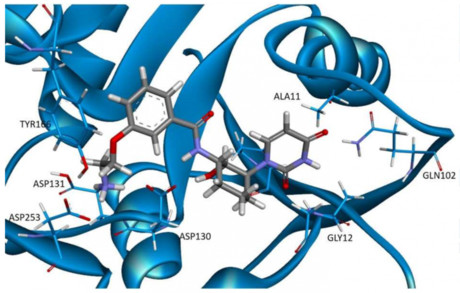
Now researchers from North Carolina State University have identified several compounds that may be effective in containing Listeria’s virulence — or ability to produce disease. The researchers already knew that inhibiting the glucose-1-phosphate uridylyltransferase (GalU) enzyme in Listeria significantly modifies the bacterial cell surface and this, in turn, renders the Listeria much less virulent and so less able to cause illness.
The researchers turned their attention to identifying potential compounds that could inhibit the function of GalU. Using computers and cheminformatics methods, they characterised, analysed and virtually screened more than 88,000 compounds with the potential to inhibit GalU.
Computer models found 37 compounds promising enough to be tested in vitro. Of the 37, three were deemed effective enough to warrant further study.
Interestingly, inhibiting GalU also served to make the Listeria more vulnerable to cefotaxime, an antibiotic to which the bacteria are naturally resistant.
Refining research helps optimise flavours of edible oils
A research team has identified the odour-active compounds responsible for the soapy and metallic...
Champion pasta maker from the NSW South Coast
Premium dried pasta doesn't just come from Italy; Duro's Gigli has been named Champion...
$109m funding for South Australia's wine industry
The SA Government has announced $109 million in funding to help the state's $2.4bn wine...